
The Biography
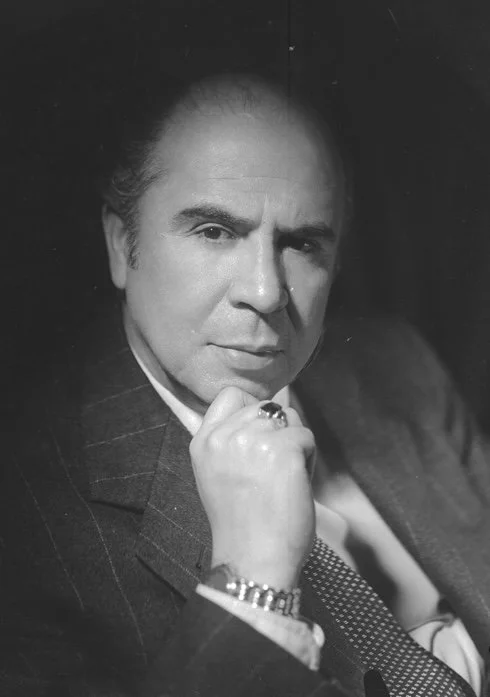
Arturo Pacheco Altamirano
(1905–1978)
Arturo Pacheco Altamirano (1905-1978) painted the soul of Chile's coastline, and he did it entirely on his own terms. Born in Chillán on April 24, in the green Ñuble province, his first glimpse of a life in color came from a humble gift: colored pencils from his aunt, Sister Elisa. He studied at Escuela Superior de Hombres N°2 in Chillán Viejo and Liceo de Concepción, then briefly enrolled in architecture at the University of Chile. When his father died, he walked away from academia for good and taught himself to paint, guided by nothing but instinct and the rhythms of the sea.
The gamble paid off fast. In 1924, historian Enrique Molina Garmendia invited the young painter to exhibit at Liceo de Concepción's centennial, launching him from student to professional overnight. By 1929 he had settled in Santiago and was exhibiting in the capital, painting straight through the Great Depression with his focus fixed resolutely on home. His first international travels came in 1935, and by 1939 his work was circulating through Brazil, Peru, and the United States. Not even World War II could slow the flow of his serene, sunlit marine visions.
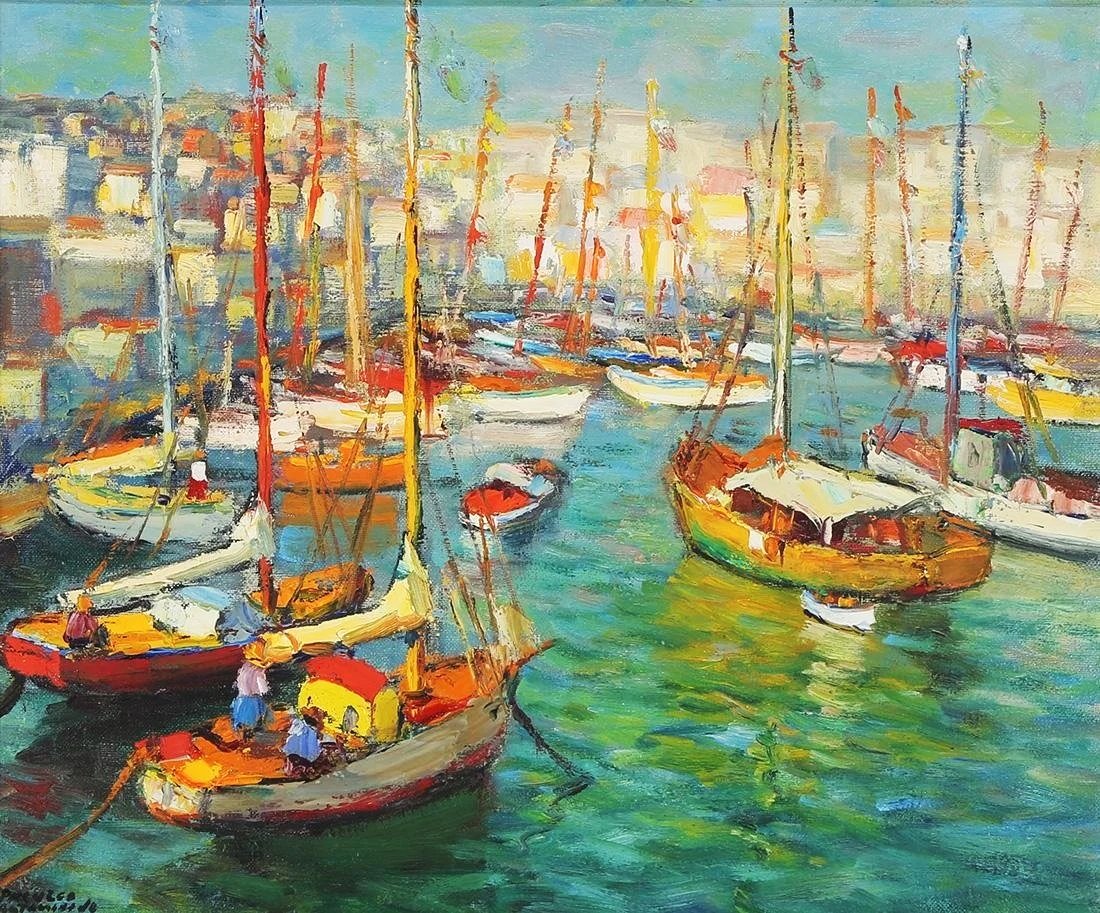
Pacheco Altamirano owed almost nothing to the great masters. His art grew from direct encounters with the natural world: oils that captured the raw energy of Chile's fishing villages, the caletas of Angelmó in Puerto Montt and the inlets of Chiloé, all labor and light, with no trace of academic polish. Canvases like his vivid Angelmó harbor scenes, his Chiloé boat studies, and Vista del mar hold the living pulse of the tide in pigment.
The world took notice. In 1952 he was named Chile's cultural attaché in Paris, followed by a posting in London in 1956, and the Paris chapter brought honorary membership in the United Nations' International Federation of Arts, Sciences, and Letters, one of many prizes he collected in Chile and abroad. The French government acquired his work for the Museum of Modern Art in Paris; New Delhi's Museum of Modern Art holds one of his signature marine views. His paintings hung in the Pan-American Union halls of Washington, D.C. and New York in 1950, and in Tokyo, Istanbul, Ankara, Mexico City, and Philadelphia. At home, museums in Chillán, Puerto Montt, and Punta Arenas preserve his gifts, and six municipalities - Chillán, Puerto Montt, Punta Arenas, San Felipe, San Fernando, and Concepción - declared him their Honorary Son.
Celebrated by his hometown in 1964, he retired to Las Cruces and named his seaside retreat Refugio Elisa, a quiet tribute to the aunt whose colored pencils had started it all. He painted there until his death in 1978, at a serene distance from the political storms of the decade.
His legacy endures. Streets carry his name, a school in Chillán Viejo was renamed in his honor, and his definitive vision of Chile's coastal life helped shape the spirit of the nation's Generation of 1950. From Philadelphia to Tokyo, his work still commands the eye: a radiant record of Chile's maritime frontier, painted by a man who never needed anyone to teach him how to see.
The world took notice. In 1952 he was named Chile's cultural attaché in Paris, followed by a posting in London in 1956, and the Paris chapter brought honorary membership in the United Nations' International Federation of Arts, Sciences, and Letters, one of many prizes he collected in Chile and abroad. The French government acquired his work for the Museum of Modern Art in Paris; New Delhi's Museum of Modern Art holds one of his signature marine views. His paintings hung in the Pan-American Union halls of Washington, D.C. and New York in 1950, and in Tokyo, Istanbul, Ankara, Mexico City, and Philadelphia. At home, museums in Chillán, Puerto Montt, and Punta Arenas preserve his gifts, and six municipalities - Chillán, Puerto Montt, Punta Arenas, San Felipe, San Fernando, and Concepción - declared him their Honorary Son.
Celebrated by his hometown in 1964, he retired to Las Cruces and named his seaside retreat Refugio Elisa, a quiet tribute to the aunt whose colored pencils had started it all. He painted there until his death in 1978, at a serene distance from the political storms of the decade.
His legacy endures. Streets carry his name, a school in Chillán Viejo was renamed in his honor, and his definitive vision of Chile's coastal life helped shape the spirit of the nation's Generation of 1950. From Philadelphia to Tokyo, his work still commands the eye: a radiant record of Chile's maritime frontier, painted by a man who never needed anyone to teach him how to see.