Arturo Pacheco Altamirano
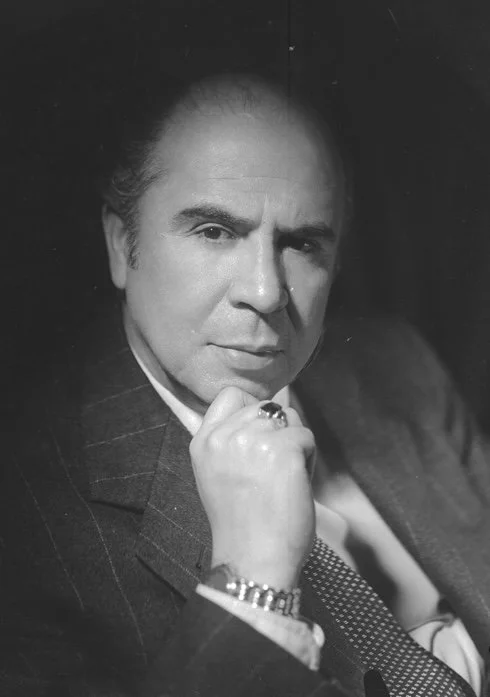
In the verdant Ñuble province of Chile, Arturo Pacheco Altamirano (1905–1978) first glimpsed the chromatic world of art through the colored pencils gifted by his aunt, Sister Elisa, igniting a passion that defined his path. Born in Chillán on April 24, he attended Escuela Superior de Hombres N°2 in Chillán Viejo and later Liceo de Concepción, where humanistic studies framed his emerging sensibilities. Briefly enrolled in architecture at the University of Chile, he forsook formal academia upon his father's death, turning instead to autodidactic mastery of painting amid the coastal rhythms of his homeland.
Economic pressures mounted in post-World War I Chile as Pacheco Altamirano channeled his energies into art. By 1929, settled in Santiago, he navigated the global turbulence of the Great Depression and rising fascism in Europe, though his focus remained resolutely local. World War II's onset coincided with his inaugural international travels in 1935, yet wartime disruptions scarcely altered his output of serene maritime visions. In 1952, amid Cold War cultural diplomacy, he served as Chile's cultural attaché in Paris, followed by a 1956 posting in London; these roles amplified his visibility without shifting his thematic core. Later, honored by his hometown in 1964, he retired to Las Cruces, where national political upheavals of the 1970s unfolded at a distance from his canvas.
Pacheco Altamirano's instinctive practice owed little to canonical figures, emerging instead from unmediated encounters with nature. Early validation came via Enrique Molina Garmendia, the Chilean historian who in 1924 invited him to exhibit at Liceo de Concepción's centennial, propelling his transition from student to professional.
Pacheco Altamirano's trajectory crystallized with a 1924 debut at Liceo de Concepción's centennial celebration, marking his pivot to full-time painting. Santiago exhibitions followed in 1929, solidifying his presence in the capital. International sojourns evolved into broader circuits across Brazil, Peru, and the United States by 1939, culminating in widespread recognition.
Rendering the Chilean coastline with unvarnished immediacy, Pacheco Altamirano wielded oil paints to seize nature's primal pulses in luminous marines and bustling ports. His motifs centered on fishing hamlets—caletas like Angelmó in Puerto Montt and Chiloé inlets—evoking labor and luminosity without academic contrivance. Representative canvases include vivid Angelmó harbor scenes and Chiloé boat studies, alongside Vista del mar, each distilling tidal vitality into enduring pigment.
Pacheco Altamirano's institutional footprint spans continents, with acquisitions anchoring his stature: the French government secured pieces for Paris's Museum of Modern Art post-1950s presentations, while New Delhi's Museum of Modern Art holds a signature marine view. Pan-American Union halls in Washington, D.C., and New York hosted pivotal 1950 displays, echoed in Tokyo, Istanbul, Ankara, Mexico City, and Philadelphia venues. Chilean museums in Chillán, Puerto Montt, and Punta Arenas preserve his gifts, underscoring enduring national ties.
Throughout his career, Pacheco Altamirano garnered distinctions affirming his prowess, including sundry artistic prizes in Chile and abroad. In 1952, France's cultural embassy role yielded honorary membership in the United Nations' International Federation of Arts, Sciences, and Letters. Multiple municipalities—Chillán, Puerto Montt, Punta Arenas, San Felipe, San Fernando, and Concepción—proclaimed him Honorary Son, cementing his civic reverence.
In his twilight years at Las Cruces, Pacheco Altamirano christened his seaside retreat "Refugio Elisa," a quiet tribute to the aunt whose humble colored pencils had unlocked his lifelong chromatic odyssey.
While direct disciples elude record, Pacheco Altamirano's vivid codification of Chile's maritime vernacular resonated in regional portrayals of coastal toil, enriching the nation's Generation of 1950 ethos through unpretentious fidelity to place. Streets bear his name, as does a renamed Chillán Viejo lycée, with holdings in disparate global institutions from Philadelphia to Tokyo perpetuating his gaze. His oeuvre endures as a luminous chronicle of Chile's watery frontiers, anchoring cultural memory with elemental grace.